

Table of Contents
- Why Cow Manure Odor Clings to Fabric
- Step 1: Identify the Source and Remove Solid Manure
- Step 2: Pretreat the Odor-Affected Clothing
- Step 3: Soak Clothes Before Washing
- How to Wash Heavily Soiled Farm Clothes
- How to Remove Stubborn Odors from Laundry
- How to Get Manure Smell Out of Shoes
- Drying and Odor Prevention for Future Loads
- Frequently Asked Questions
Last Updated: October 18, 2026
Why Cow Manure Odor Clings to Fabric
Understanding how to get cow manure smell out of clothes starts with knowing that cow manure smell is stubborn because it's a mix of organic compounds and bacteria that bond deeply to fabric fibers.
The longer manure sits, the worse it gets: dried particles embed and bacteria colonies establish in the material.
This is especially true for farm clothes and heavy workwear. Denim, canvas, and work jackets absorb manure deeply, but their thickness means proper treatment can fully restore the garment.
Step 1: Identify the Source and Remove Solid Manure
Before washing anything, remove as much solid manure as possible to keep the odor from spreading to your washing machine and other clothes.
Here's what to do:
- Take the soiled clothing outside or to a utility area
- Use a stiff brush or old toothbrush to scrub away dried manure
- For wet manure, let it dry first, it's easier to remove once hardened
- Brush toward a trash bin so particles fall directly into it
- Pay special attention to seams, cuffs, and pocket areas where manure collects
- Shake out the garment thoroughly after brushing
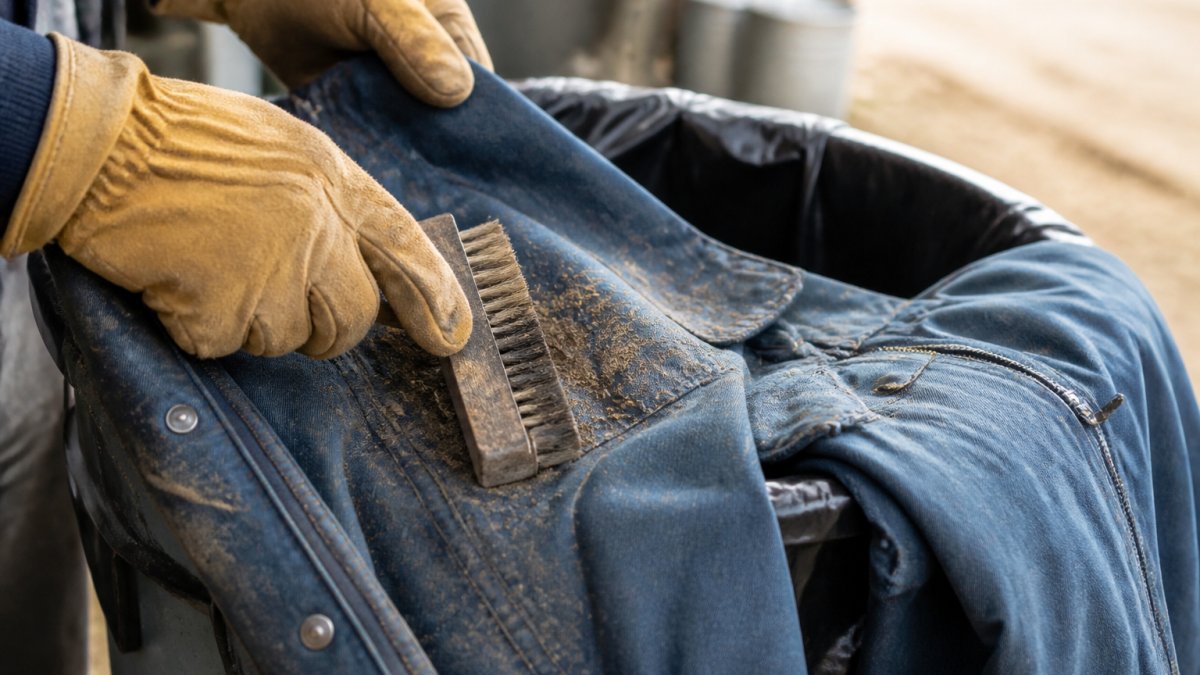
Don't skip this step, washing clothes with manure still embedded clogs your machine and spreads the smell. A few minutes of brushing saves hours of trouble.
Step 2: Pretreat the Odor-Affected Clothing
Pretreating targets organic compounds and bacteria before the wash. Enzyme-based products shine here, breaking down the proteins and oils that cause the smell.

Using enzyme-based stain removers
Enzyme-based removers break down organic material at the molecular level, which makes them especially effective on manure.
Apply enzyme-based stain removers like Ranchx Pre Wash & Stain Remover directly to the affected area at full strength. Spray or pour it on, let it soak into the fabric, and don't dilute it. The enzymes need full concentration to work effectively.

Let the pretreatment sit 15 to 30 minutes, or longer, even overnight, for heavily soiled areas. The longer it works, the more organic material it breaks down.
Applying baking soda for odor neutralization
Baking soda neutralizes odors by changing the fabric's pH and absorbing smell-causing compounds, working alongside enzyme treatments.
Sprinkle dry baking soda on the affected area, let it sit 30 minutes to an hour to absorb odors and moisture, then brush or shake it out before washing.
For a stronger treatment, mix baking soda with water into a paste, apply it to the stain, let it dry, then brush it off, especially effective on denim and canvas.
Step 3: Soak Clothes Before Washing
Soaking gives pretreatment time to work and loosens stubborn odor particles, critical for heavily soiled farm clothes.
Fill a bucket or sink with cool to warm water, add 1 cup of baking soda or white vinegar per gallon, and submerge the clothing for 2 to 4 hours, or overnight for severe odors.
The water should cover the garment completely; for multiple pieces, use a larger container or soak in batches.
Don't use hot water for soaking, it can set odors into fabric and damage some materials. Cool or warm water is safer and still effective.
How to Wash Heavily Soiled Farm Clothes
After soaking, washing finishes the job, but the right settings depend far more on the fabric than the severity of the smell. A heavy cotton work shirt and a wool blend jacket need opposite approaches, so use the fabric-specific guidance below before choosing a cycle.
Selecting the right laundry detergent
Use a detergent formulated for organic stains and odors. Standard detergents target everyday soil and body oils, not manure's proteins and bacteria, so look for enzymes (protease, amylase, lipase) on the label or heavy-duty/farm laundry marketing.
Ranchx Scented Bliss Premium Laundry Detergent uses all-natural enzymes to break down organic matter while staying gentle on fabric. For HE machines, use 1 to 2 ounces per load. For standard machines, use 2 to 3 ounces.
Choosing water temperature and wash cycle
Warm water is the safest middle ground for most farm clothes: hot enough to release organic residue, cool enough not to set odor into heat-sensitive fibers. Use a heavy-duty cycle, and turn on "heavy soil" or "extra rinse" if available, a second rinse removes detergent residue that can hold odor.
Fabric-specific care instructions
Check the care label first, then use this guide:
Ranchx Pre Wash & Stain Remover - 16 oz →
- Denim and canvas: These tough fabrics can handle warm to hot water and heavy cycles. Wash inside out to reduce fading and abrasion. Hot water is acceptable here if the care label allows it.
- Cotton work shirts and pants: Warm water and a standard heavy cycle work well. If the care label says cold water only, use cold water and extend the soak time instead of raising the temperature.
- Wool and wool blends: Use cool water and a gentle or wool cycle. Wool is sensitive to heat and agitation, and hot water can cause shrinkage and permanent odor retention. Use a wool-safe detergent and skip the dryer.
- Synthetic blends (polyester, nylon, spandex): Warm water and a moderate cycle prevent damage while still cleaning effectively. Synthetics can hold odor in the fiber itself, so an extra rinse is especially important. Avoid high dryer heat, which can set odor permanently.
- Delicate garments and items with care-label restrictions: If the label says hand wash, dry clean only, or no machine wash, respect it. For hand washing, use cool water with a small amount of enzyme detergent, soak 15 minutes, rinse thoroughly, and air-dry. For dry-clean-only items, point out the manure contamination to the cleaner so they can pretreat appropriately.
- Waterproof or coated workwear: Wipe the exterior with a damp cloth and diluted vinegar before washing, and avoid fabric softener, which can break down coatings. Follow the manufacturer's care instructions for the shell and any removable liners.
If the care label says "cold water only," respect it even if the odor is severe, damage is worse than lingering smell, and a longer soak plus an extra rinse usually compensates.
How to Remove Stubborn Odors from Laundry
If you're still wondering how to get cow manure smell out of clothes after one full wash, don't just re-run them with more detergent. Lingering odor usually means pretreatment missed a seam or cuff, the wash water was too cool, the machine itself holds odor, or dryer heat baked the smell back in. Work through the decision tree below in order.
Troubleshooting decision tree for odor that survives a wash
1. Smell the seams, cuffs, and underarm areas first. If odor is concentrated in those spots, the pretreatment missed them.
2. If the whole garment smells faintly, re-soak rather than re-wash. Fill a bucket with cool water and add 1 cup of white vinegar per gallon.
**3.
**4.
5. If odor persists after two full treatment cycles, stop washing and switch tactics. The odor is likely in a thick seam, padded lining, or non-removable component.
Using vinegar and ammonia safely
White vinegar and ammonia are both effective but not interchangeable and must never be combined, mixing them creates toxic chloramine gas. Use one product per wash cycle, rinse thoroughly, and only then consider the other on a later cycle. Never pour vinegar into a load containing ammonia, and never store mixed solutions.
- Vinegar: Add 1 cup of white vinegar to the rinse cycle. It neutralizes alkaline odor residue and softens fabric. Do not use it at the same time as chlorine bleach.
- Ammonia: Mix 1 tablespoon of clear, non-sudsing ammonia per gallon of cool water and soak for 1 to 2 hours, then wash normally. Use only in a well-ventilated area, wear gloves, and keep it away from bleach and vinegar.
Oxygen-based stain removers and repeat washing
Oxygen-based removers (color-safe or oxygen bleach) release hydrogen peroxide in water, breaking down organic residue without chlorine bleach's fabric damage. Add the package-recommended amount to warm water, submerge 30 minutes to 2 hours, then wash normally. Don't mix them with ammonia or chlorine bleach in the same soak.
If the smell persists after one wash, repeat the full process, pretreat, soak, wash, rather than escalating to a harsher chemical. Two or three gentle cycles beat one aggressive treatment and are far less likely to damage fabric.
How to Get Manure Smell Out of Shoes
Shoes absorb manure smell deeply because they trap moisture and bacteria inside, and machine washing can damage them, so use a different approach.
For the outside, scrub with a brush and equal parts water and white vinegar to remove odor-causing bacteria without damaging the material, then air-dry completely.
If the smell lingers, place crumpled newspaper or activated charcoal inside for 24 to 48 hours, replacing it every 12 hours for best results.
Drying and Odor Prevention for Future Loads
How you dry clothes affects whether odors return. Air-drying in sunlight is best, UV rays kill bacteria and help eliminate remaining odors.
Hang clothes on a line or lay them flat in direct sun for at least 4 hours, ideally all day.
Prevention tips for future loads:
- Brush off solid manure immediately after work, don't let it dry onto fabric
- Soak farm clothes in a bucket of water with baking soda as soon as you get home
- Wash farm clothes separately from other laundry to prevent odor transfer
- Store clean farm clothes in a well-ventilated area, not in a sealed closet
- Check your washing machine's rubber seals and drain for trapped manure particles, clean them monthly
At Ranchx, we recommend keeping a dedicated pretreatment spray for farm clothes.
Getting cow manure smell completely out of clothes takes a systematic approach, but it's absolutely doable. The key is removing solid matter first, then attacking the odor from multiple angles, enzymes, baking soda, soaking, and the right detergent working together.
Frequently Asked Questions
Why does cow manure smell persist in clothes even after washing?
Cow manure odor clings to fabric because odor-causing bacteria and organic compounds bond deeply into fibers. Regular detergent alone cannot always break down these compounds or eliminate the bacteria. Pretreatment with enzyme-based stain removers, soaking, and proper water temperature are essential to lift the smell at the source before it sets permanently into the fabric.
Can vinegar or baking soda help remove manure odor from clothes?
Yes. Baking soda neutralizes odors by absorbing them; apply it directly to damp fabric or add it to your wash cycle. Diluted vinegar works as a natural disinfectant that kills odor-causing bacteria. For best results, use baking soda during pretreatment and add vinegar to the rinse cycle. However, enzyme-based detergents like Ranchx Scented Bliss are formulated specifically to break down organic stains and odors more effectively than these home remedies alone.
How long should I soak heavily soiled farm clothes?
Soak manure-soiled clothing for at least 2-4 hours, or overnight for severe odors. A longer soak allows detergent and enzymes to penetrate fibers and break down bacterial growth and organic compounds. Use cold or warm water with a quality laundry detergent designed for heavy soils, like Ranchx Scented Bliss, to maximize odor reduction before the main wash cycle.
Should I wash manure-soiled clothes separately from regular laundry?
Yes. Wash heavily soiled farm clothes in a separate load to prevent odor transfer to other garments and to allow for longer soaking and hotter water temperatures. This also lets you use higher detergent concentrations without affecting delicate items. After the wash cycle, run an extra rinse to ensure all bacteria and odor-causing compounds are removed before drying.